Cellulite Treatment: Causes, Methods, and the Most Effective Solution
What is cellulite?
An effective cellulite treatment process requires first correctly identifying the problem. Cellulite (Gynoid Lipodystrophy); is the condition where the fat tissue under the skin gets trapped between connective tissue bands, giving the skin an “orange peel” appearance. It is not just a weight problem; it is a condition based on genetic and hormonal structure.
Prof. Dr. Ahmet Karacalar; rejects the "one-size-fits-all" approach for successful treatment. Success in treatment depends on planning according to the stage of cellulite, type (hard, soft), and the individual's specific anatomical structure.

Smooth appearance in the legs with cellulite treatment.
Cellulite Is Not Just Cellulite
The appearance of orange peel is a reflection of underlying metabolic issues.
Therefore, it requires a medical perspective.
Lipoedema, Insulin resistance, chronic inflammation, estrogen dominance, mitochondrial dysfunction, microbiota imbalance, and deficiencies in certain vitamins are some of these.
After resolving these issues, superficial layer liposuction and cutting of bands are additional surgical procedures required for stage 3 and 4 cellulite. If there are problems related to tissue sagging, the only solution is lifting.
High insulin increases the growth and hardening of fat cells, leading to an increase in inflammation in adipose tissue. Lymph drainage and blood circulation are impaired. In estrogen dominance, fat storage increases. Especially, upper layer fat accumulation increases the orange peel appearance. Vascular permeability increases, causing edema. Sedentary lifestyle, prolonged sitting, and decreased muscle mass disrupt circulation.
Mitochondria are energy factories. In impaired function, fat cannot be burned. Gut bacteria issues increase the endotoxin load. This situation increases inflammation in the skin.
Vitamin C, zinc deficiency, inadequate protein, and excessive sugar are other contributing factors.
Viewing this condition solely as an aesthetic issue, especially with heat-generating, damaging devices worsens the situation. First, it should be addressed as a medical issue, and aesthetic surgical procedures should be built upon that.
Things You Should Know Before Treatment:
What Causes Cellulite?
We can explain its formation with a simple mechanism: Pushing and Pulling.
- Pushing: The fat cells beneath the skin grow and push the skin upwards.
- Pulling: The vertical connective tissue bands surrounding the fats harden and pull the skin downwards.
These opposing forces cause rippling on the skin surface. Our treatment methods aim to correct this mechanism precisely.
Cellulite Treatment Methods
In our clinic, we apply combined protocols targeting the source of the problem (fat, connective tissue, or skin quality) for treatment. Here are the methods we use most frequently:
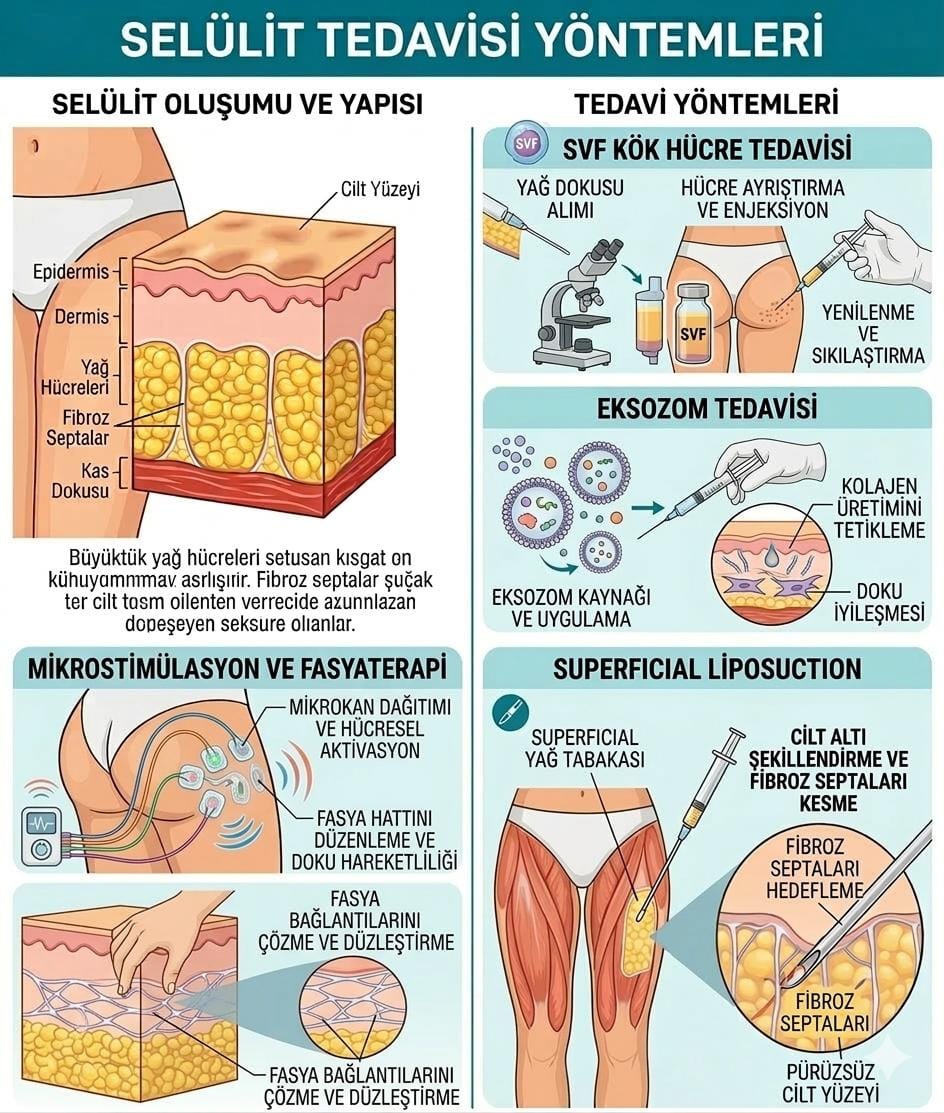
Cellulite treatment methods: SVF stem cell, exosome therapy, microstimulation, and superficial liposuction infographic.
1. Subcision (Subcutaneous Release)
It is generally the most effective method we apply at advanced levels. The hard fibrous bands pulling the skin down are cut and released using a special technique, providing permanent improvement.
2. Enzymatic Lipolysis
We administer special enzymes that break down fat cells under the skin. We frequently use this method, especially in areas with stubborn fat accumulation.
3. Mesotherapy (Cellulite Vaccine)
It is the injection of vitamin-mineral mixtures that accelerate circulation and support fat burning.
4. Autologous Exosome Therapy
It is the process of increasing skin quality with restorative cells obtained from the person's own blood.
5. Microstimulation Fascia Therapy
We stimulate the fascia tissue to regulate circulation and increase tissue elasticity.
The Most Effective Surgical Cellulite Treatment Methods
The tissue with an orange peel appearance concerns superficial fat tissue. Liposuction can be applied to this area. However, if there is ‘false cellulite’ (skin sagging), standard treatment. instead Leg Lifting is preferred.
Rating in Treatment Planning
Staging is important for a proper treatment plan:
- Degree 1: It is only noticeable when compressed.
- Degree 2: It is visible when standing, disappears when lying down.
- Degree 3: There are noticeable dimples both when standing and lying down.
Lifestyle Recommendations Supporting Treatment
No medical procedure is a “miracle” on its own. We recommend the following to accelerate the process:
- Dry Brushing: Accelerates lymph circulation.
- Reduce Swelling: It prevents payment.
- Strength Exercises: It tightens the skin by increasing muscle mass.
Is cellulite treatment permanent?
Medical treatments provide long-term results (1-3 years), but maintenance (reminder) sessions may be needed along with aging and weight changes.
Does cellulite occur in thin people?
Yes. It is not only related to weight; it is related to skin thickness and connective tissue structure. It can also be seen in very thin individuals to a significant degree.
Do cellulite creams work?
Creams moisturize the skin and provide temporary tightness, but they cannot eliminate the fibrous bands or fat tissue beneath the skin.
Is there a treatment for cellulite?
Yes. From a medical perspective, it is possible to reverse the stage and significantly improve its appearance. Subcision and Lipolysis are the most effective methods.
How does cellulite go away the fastest?
The fastest results are targeted with medical interventions. Especially, the release of indentations beneath the skin with the Subcision method provides a rapid improvement.
What is the most effective cellulite treatment?
Combined protocols are more effective than a single method. Subcision for depressions and lipolytic treatments for fat should be used together.
Which hormone causes cellulite?
Its primary role is played by the estrogen hormone. Therefore, it increases during periods of hormonal change.
Can cellulite go away in 1 month?
It is difficult with just diet, but a significant reduction in appearance can be achieved within 1 month with clinical medical treatments.
Is walking good for cellulite?
Walking increases circulation but cannot break established tight bands on its own. Medical support is essential.
How to get rid of cellulite on the legs?
It is planned according to the stage. In advanced stages, the bands need to be opened with non-surgical medical interventions.
Does cellulite go away as we lose weight?
No, this is a common misconception. Even if you lose weight and reduce fat volume, you cannot eliminate subcutaneous bands.
What causes cellulite the most?
The main reason is genetic and hormonal. When a sedentary lifestyle and poor nutrition are added to this, the formation accelerates.
How to get rid of cellulite on the thighs?
The most effective method for deep hollows in the hips is the Subcision procedure, which allows the release of fibrous bands.
What causes the most cellulite?
Refined sugar, excessive salt, packaged foods, and prolonged inactivity are the most increasing factors.
What vitamin deficiency causes cellulite?
The deficiency of Vitamin C necessary for connective tissue production can disrupt the elasticity of the skin, making it more pronounced.
What is painful cellulite? Does cellulite cause pain?
Normally, it does not cause pain. If there is pain upon touch, this Lipoedema could be a disease.
Cellulite Treatment Prices 2026
Treatment costs are determined on a personalized basis according to the stage and the combined methods to be applied. For detailed information, you can get in touch.
The Culprits Behind Cellulite, Lipedema, and Love Handles in Menopause
Most patients also have lipedema. In fact, the main diagnosis is lipedema. During the pre-menopausal period, the female body is generally prone to an “Apple Shape” (where fat is stored in the hips and legs). However, with menopause, this structure quickly transforms into an “Apple Shape” (where fat is stored in the torso and abdomen). In patients with lipedema, both apple and pear shapes are seen together. Here are the main reasons for this:
1. The Removal of Estrogen's Protective Shield
Estrogen is not just a reproductive hormone; it is like a “traffic cop” that determines where fat is stored in the body.
- When estrogen is present: The body directs fat to the subcutaneous layer, hips, and thighs.
- When estrogen withdraws: This directing mechanism is disrupted. The body begins to store fat around the organs (visceral fat) and in the abdominal cavity. This is the number one reason for the widening of the waist circumference.
2. Risk of Insulin Resistance
A drop in estrogen can weaken the body's ability to process blood sugar. When cells respond less to insulin, the pancreas releases more insulin. High insulin levels give the body a single command: “Store fat and never burn it.” This storage usually occurs around the waist.
3. Dominance of Cortisol (Stress Hormone)
The menopause period can be stressful due to insomnia, hot flashes, and mood swings. The cortisol hormone released during stress pulls fats from the bloodstream and fills fat cells, especially in the abdominal area. This is because abdominal fat tissue is 4 times more sensitive to cortisol than other areas.
4. Muscle Loss (Sarcopenia)
Muscle mass naturally decreases with age. Muscles are the engine of metabolism; the less muscle you have, the fewer calories you burn at rest. Continuing to eat the same amount while metabolism slows during menopause results in inevitable weight gain (especially around the waist).
Why Does Lipedema Worsen During Menopause?
Lipedema (Lipedema) is a painful and chronic fat tissue disorder that is often confused with obesity but is completely different.
So, why does menopause “flare up” lipoedema?
1. Hormonal Chaos and Inflammation
Lipoedema is a hormone-sensitive disease. It is triggered during major hormonal changes such as puberty, pregnancy, and menopause. Fluctuations and the final drop in estrogen and progesterone levels increase inflammation (the fire) in lipoedematous fat tissue. This causes patients to feel more pain, tenderness, and heaviness in their legs.
2. Increased Burden on the Lymphatic System
The visceral (abdominal) fat that comes with menopause increases intra-abdominal pressure. This pressure makes it difficult for lymph fluid and blood, which should flow upward from the legs, to circulate.
- Result: The already sensitive lymphatic system is further strained, swelling (edema) in the legs increases, and the stage of lipoedema may progress.
3. Loosening of Connective Tissue
Estrogen is critical for collagen production, which maintains the firmness of the skin and connective tissue. When collagen decreases during menopause, connective tissue loosens. Lipoedematous tissue already has a “loose” structure; with menopause, it loses tissue support completely, leading to more pronounced deformity and appearance in the legs.
4. Vicious Cycle: Movement Restriction
As joint pain and lipoedema pain increase during menopause, women may avoid movement. Decreased movement leads to weight gain, and weight gain feeds lipoedema. This vicious cycle exacerbates the symptoms of lipoedema.
Conclusion and Recommendations
Although changes in body shape during menopause and the flare-up of lipoedema may seem like “fate,” it is possible to manage this process.
- Menopause cellulite and lipedemic fats are resistant to diet and exercise. For this, these fats need to be removed through liposuction.
- Transdermal estradiol therapy and progesterone are recommended for patients with lipedemic menopause.
News from the National Press
Dr. Karacalar's Books
To examine Prof. Dr. Ahmet Karacalar's philosophy of aesthetic surgery and the scientific works he has written Dr. Karacalar's Books you can visit the page.